
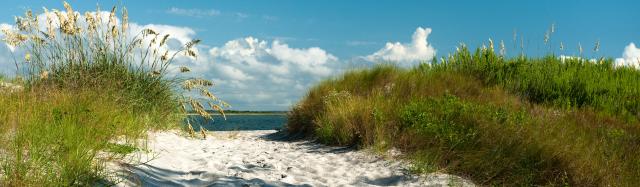
At the eastern tip of Bogue Banks, where Bogue Sound meets the Atlantic and Beaufort Inlet cuts a deep-water passage between the two, Fort Macon State Park sits on a stretch of barrier island shaped by tides, storms, and centuries of maritime use. Fort Macon belongs to a small group of five North Carolina state parks in the state system's "million visitors" club, and the pentagonal brick fortification at its heart, built between the 1820s and 1830s, played a role in three American conflicts, including a notable Civil War siege in 1862. Within a single afternoon, you can walk casemates that Confederate and Union troops once held, follow a nature trail through a maritime forest of live oaks and yaupon, and step out onto a wide stretch of undeveloped shoreline along the inlet. This is a place where North Carolina's maritime heritage and natural landscape meet at the same trailhead, and the sections below walk you through the history, trails, beaches, and practical details that make planning a visit straightforward.
The Story Behind Fort Macon State Park
Fort Macon's significance comes from where it stands and what it has witnessed. The fort guards Beaufort Inlet, one of the few deep-water entries along the North Carolina coast, and the layered story of its construction, military service, and conversion into a public park gives the place a weight you can feel as you walk it.
A Fort Built to Guard Beaufort Inlet
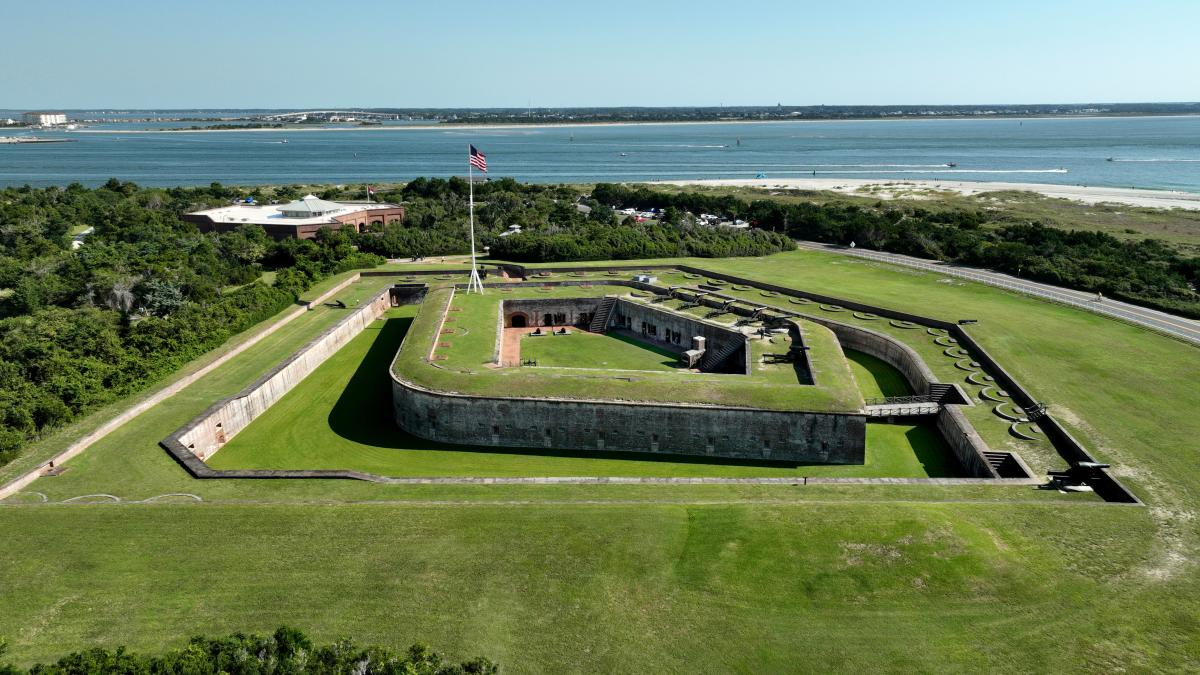
Beaufort Inlet was one of North Carolina's most important deep-water entries in the early 1800s, and the federal government built Fort Macon between 1826 and 1834 as part of the Third System of coastal defenses meant to protect the young nation's harbors. A young engineer named Robert E. Lee was briefly assigned here to address erosion threatening the fort's foundations, an early-career detail that gives the place a quiet historical texture. The inlet itself has a much longer maritime backstory: Beaufort, just across the water, is North Carolina's third-oldest town, and Blackbeard once frequented these waters before his flagship Queen Anne's Revenge ran aground nearby in 1718.
The Civil War Siege of 1862
In April 1862, Union forces bombarded Fort Macon from land and sea, and the Confederate garrison surrendered within hours of the assault beginning. After the war, the fort served as a federal prison, and it was later garrisoned during the Spanish-American War and again during World War II, when soldiers stationed here patrolled the beach for German U-boats prowling just offshore. Walking the ramparts today, you're crossing a place that saw three wars' worth of American history, each one leaving its trace in the brick and the records.
From Military Post to State Park
Fort Macon transitioned from a military installation to one of North Carolina's first state parks in 1936, when the property was deeded to the state for public use. Since 1970, Fort Macon has been listed on the National Register of Historic Places, a formal recognition of its historic importance as a 19th-century coastal fort. The dual identity, recreation destination, and protected piece of American history shape your experience of a visit.
Exploring the Fort: What You'll See Inside
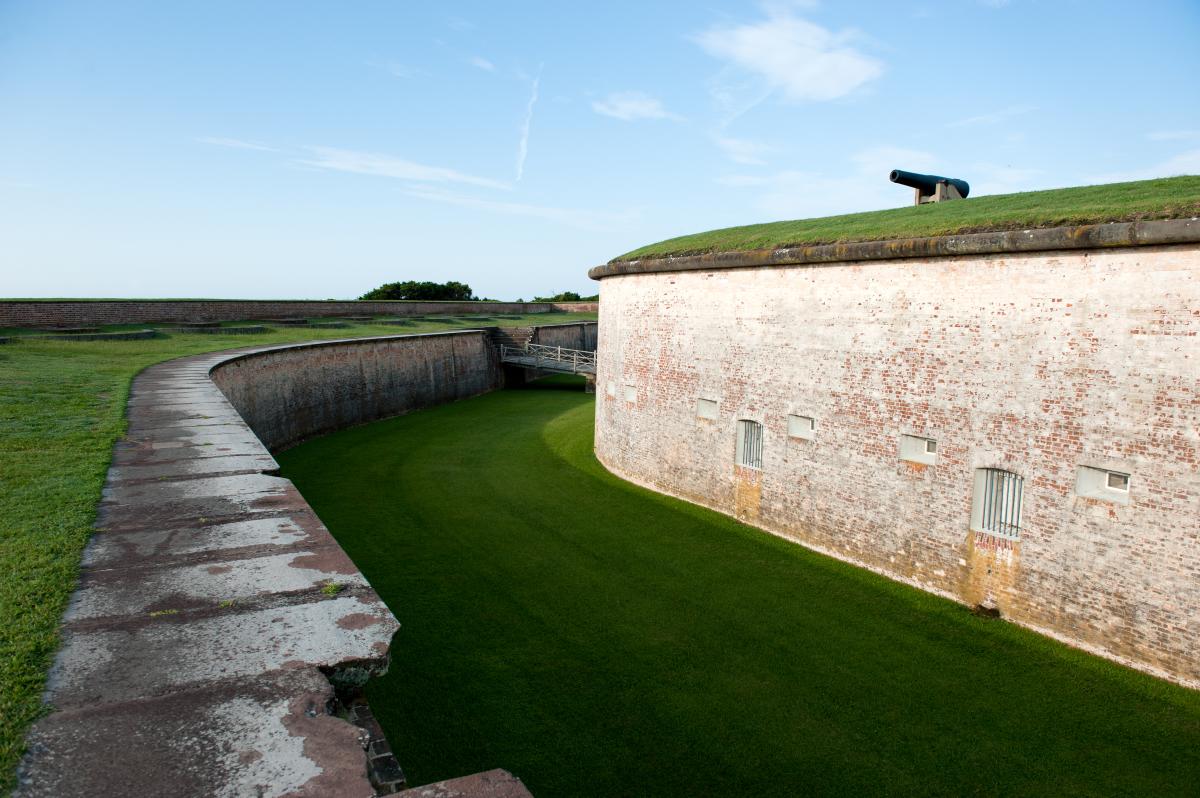
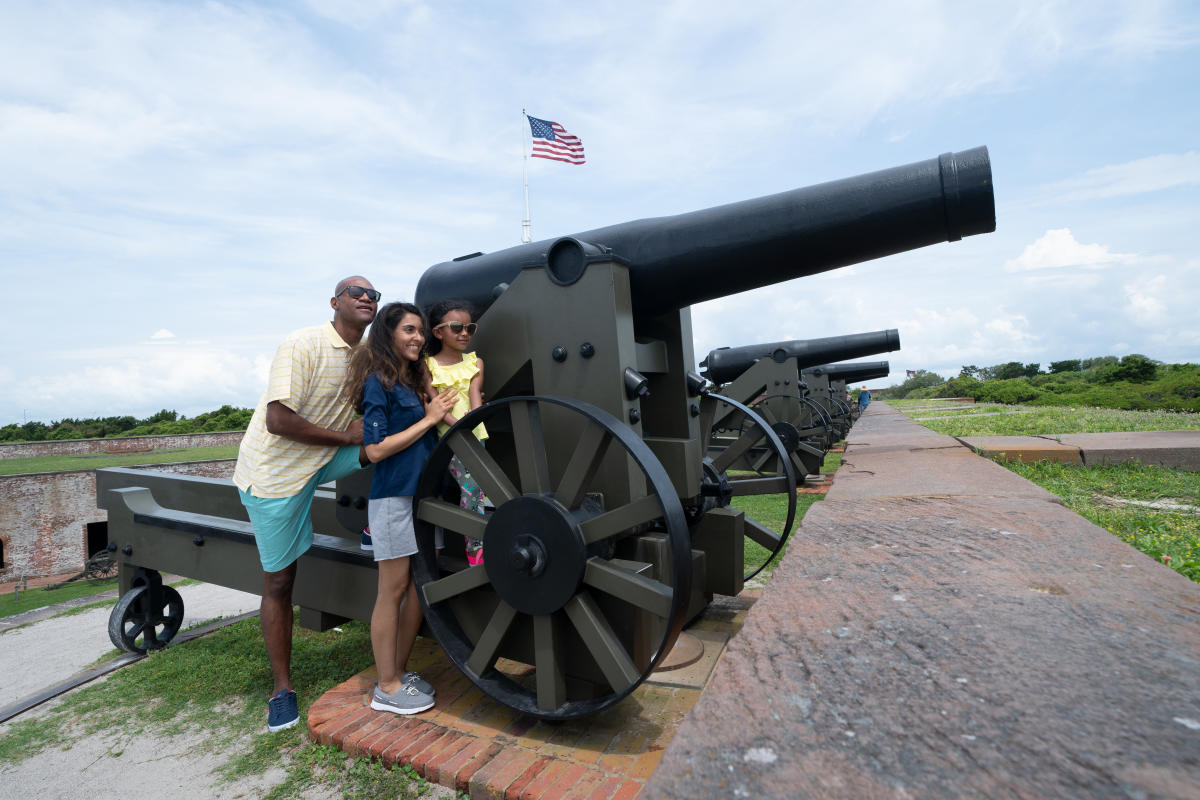
Approaching the fort, you cross a moat-style outer ditch and pass through the heavy sally port entrance into a parade ground at the center of the pentagonal structure. Restored casemates ring the interior, set up as period exhibits including soldiers' quarters, a commissary, and a gun room with a reproduction cannon you can step right up to. A short climb takes you up to the ramparts, where the view opens onto Beaufort Inlet on one side and the maritime forest on the other, the water glinting and the live oak canopy stretching back toward the trails. Plan on at least an hour inside the walls, longer if you read every interpretive panel.
The Visitor Center and Coastal Education Center
The on-site Coastal Education Center makes a useful first stop for orientation, especially for families, and houses exhibits on local marine ecology, the fort's construction, and the area's many shipwrecks. Interactive displays cover the barrier-island ecosystem and the wildlife you might encounter on the trails just outside, giving kids a frame of reference before they head out to spot it themselves. Admission to the fort and the visitor center is free, which makes Fort Macon an easy yes when you're building a flexible Crystal Coast itinerary.
Ranger-Led Tours and Living History
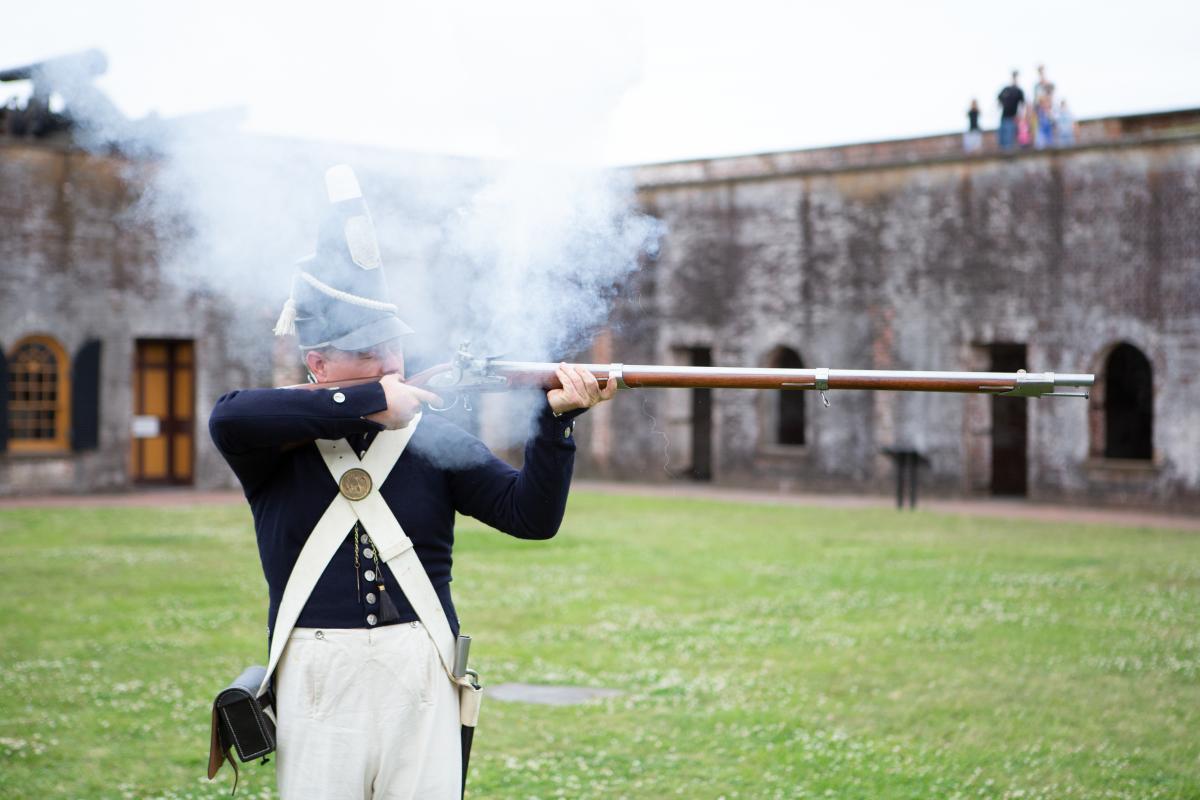
The park rangers run a strong program of guided tours, cannon firings, and living history demonstrations, with the fullest schedule typically running from spring through early fall. Cannon firings are crowd favorites, especially with younger visitors, and the living history demonstrations bring the fort's three-conflict story to life with costumed interpreters working inside the casemates. Check the park's current event calendar before your visit so you can time your arrival to coincide with a tour or demonstration that interests you.
Trails Through the Maritime Forest and Salt Marsh
Step beyond the fort walls, and the park opens into a different kind of experience entirely. Dappled light filters through a live oak canopy, the salt-tang of the marsh edge drifts in on the breeze, and the trails carry you through a maritime forest that has held this stretch of barrier island in place for generations. Two main walking options anchor the park's trail system, and the wildlife along them rewards a slow pace and attentive eyes.
Elliott Coues Nature Trail
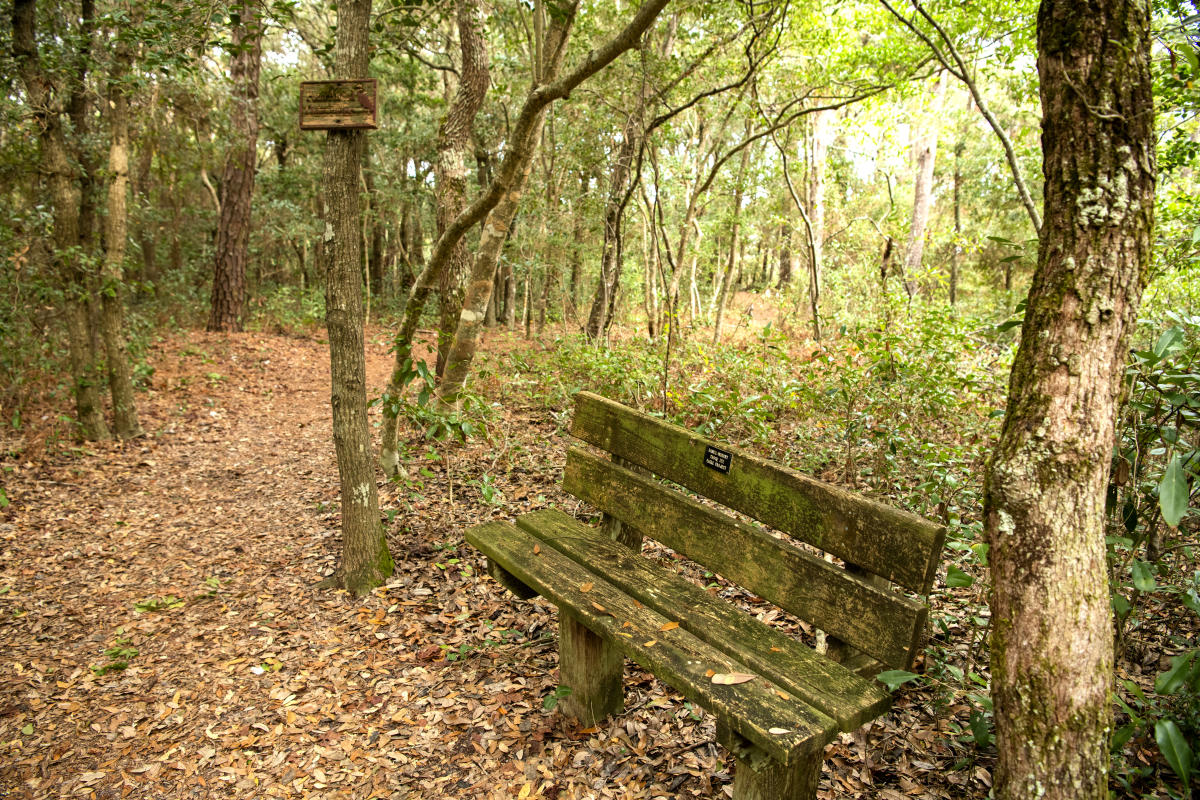
The Elliott Coues Nature Trail covers a roughly 3.2-mile loop named for the 19th-century naturalist who studied birds at Fort Macon while stationed here as an Army surgeon. The path winds through maritime forest dominated by live oak, yaupon holly, and red cedar before tracing the salt marsh edge, where you may catch glimpses of wading birds working the shallows. The surface is mostly soft sand and pine straw underfoot, so trail shoes or sneakers will serve you better than sandals.
Yaupon Garden and Short Walks
The shorter Yaupon Garden Trail loops near the fort and interprets the native plants used by the region's earliest inhabitants and early colonists, including the yaupon holly that gave the trail its name. Interpretive signs explain how Indigenous peoples brewed yaupon's caffeinated leaves into a ceremonial tea, a small cultural detail that lingers as you walk. This is a strong choice for travelers with younger children or limited time, and it pairs well with a visit to the fort when you want a taste of the natural landscape without committing to the longer loop.
Wildlife You'll See Along the Way
Brown Pelicans glide low over the inlet in long, single-file lines, Osprey nest on platforms at the marsh edge, and Painted Buntings flash through the brush in late spring with the kind of color that stops conversation mid-sentence. Migrating warblers pass through during the spring and fall windows, and white-tailed deer and the occasional red fox use the forest year-round. Near dusk, ghost crabs scatter sideways across the dune line as the light goes warm and low. Stay on marked trails as you walk, since the dune vegetation you're brushing past is what holds the barrier island together against wind and tide.
Beach Adventures at Fort Macon
The park sits at a remarkable convergence point: the Atlantic Ocean to the south, Beaufort Inlet to the east, and Bogue Sound to the north all meet within walking distance. That geography shapes everything from the surf rhythm to the shelling to the wildlife you'll spot along the shoreline. The result is one of the more varied beach experiences on the Southern Outer Banks, with each stretch of sand offering something a little different.
Swimming Beach and Bathhouse
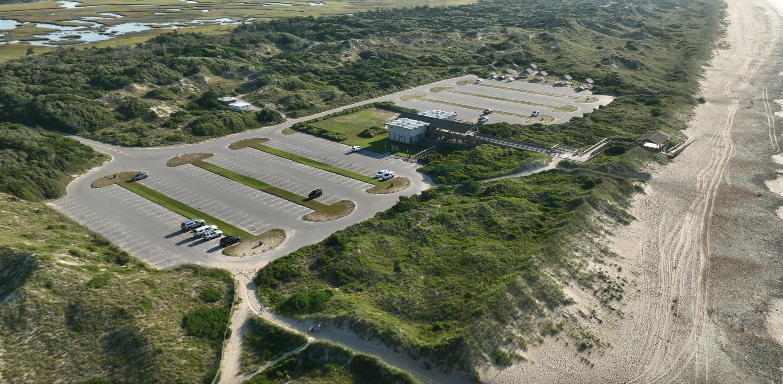
The lifeguard-staffed swimming beach is typically staffed Memorial Day through Labor Day, and the bathhouse offers showers, restrooms, changing areas, and a small concession stand for snacks and drinks. The wide beach gives families plenty of room to spread out across miles of open shoreline, and the gradual shoreline slope makes it a comfortable choice for younger swimmers building confidence in the water. A boardwalk leads directly from the bathhouse parking lot to the sand, so unloading the cooler and umbrellas takes minutes.
Shelling Along the Inlet
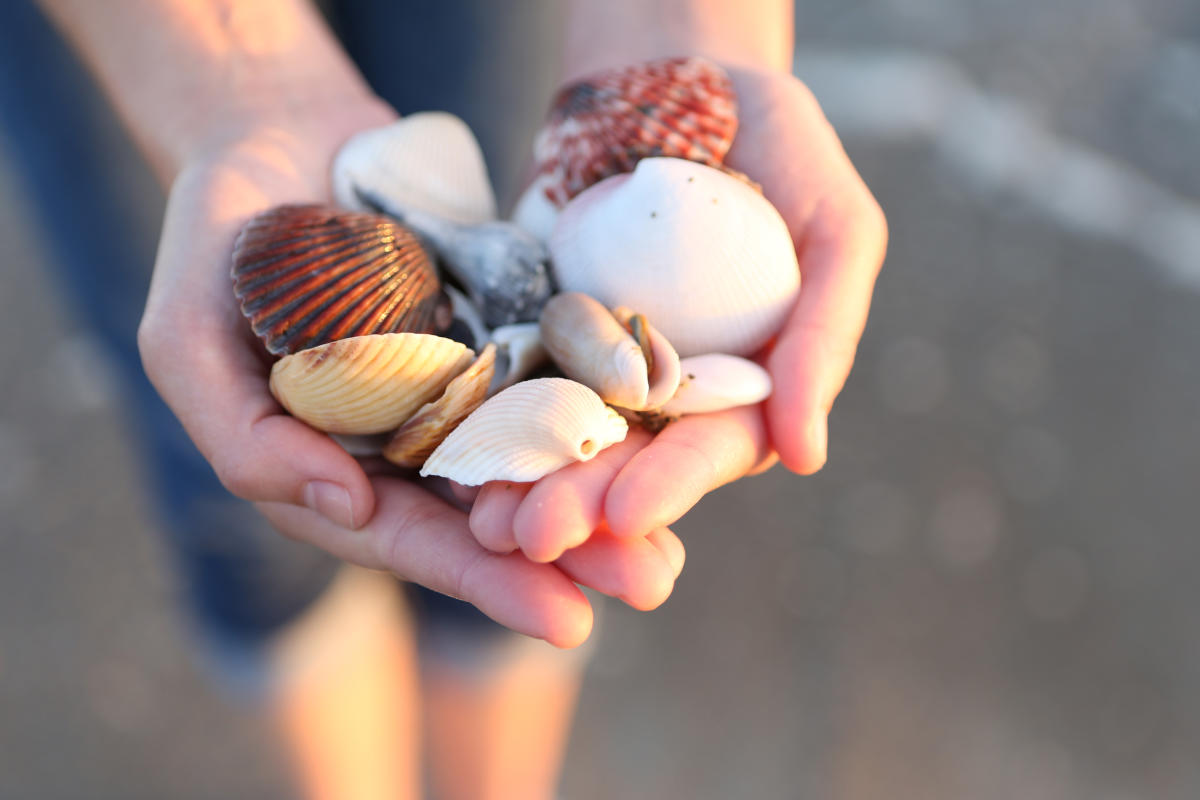
The stretch of beach near Beaufort Inlet ranks among the more rewarding shelling spots in North Carolina, particularly after a nor'easter has churned up the seafloor and pushed fresh material onto the sand. Beachcombers regularly turn up Whelk varieties, Olive Shells, Sand Dollars, and the prized Scotch Bonnet, North Carolina's official state shell. Time your visit around low tide, which you can confirm with a local tide chart the night before, and head out in the early morning hours when the best finds tend to surface before other walkers arrive. A small mesh bag works better than a bucket for carrying your finds back to the car.
Fishing the Surf and the Inlet
Fort Macon is well known among anglers for its proximity to Beaufort Inlet, where Spanish Mackerel, Bluefish, Red Drum, Flounder, and Spotted Seatrout pass through with the tides. The fishing pier-side jetty offers strong access to the inlet's flow, and you can pick up bait, tackle, and a North Carolina Coastal Recreational Fishing License at shops in nearby Atlantic Beach. For travelers wanting to go deeper, pair a Fort Macon morning with an offshore charter departing from Morehead City, which puts the Gulf Stream and its larger pelagic species within reach.
Practical Tips for Visiting Fort Macon State Park
A bit of planning goes a long way at Fort Macon, and the sections below cover the basics that make the difference between a smooth visit and a scramble for parking. The park is genuinely walkable and family-friendly, and most visits work best as a half-day or full-day stop folded into a broader NC Coast itinerary. Whether you're traveling with kids, fishing rods, a cooler, or just a notebook for the trail, a few practical details up front will save you time once you're on site.
Getting There and Parking
Fort Macon sits at the eastern end of NC Highway 58 in Atlantic Beach, about a 10-minute drive across the bridge from Morehead City. Parking is free at both the fort and the bathhouse area, with the bathhouse lot filling first on summer weekends as beachgoers stake out their spots for the day. Aim to arrive before 10 a.m. in peak season if you want a shaded space, and consider visiting the fort first and saving the beach for the afternoon when the early lots have rotated through.
Hours, Seasons, and What to Pack
The park grounds and beach generally open early in the morning and close at sunset, with hours shifting slightly throughout the year, and the fort and Coastal Education Center keep their own schedules that are worth confirming on the day of your visit. Pack sunscreen, plenty of water, sturdy trail shoes for the nature trail, and a small bag for shells. Each season offers something distinct: spring brings warbler migration through the maritime forest, summer is prime swimming and ranger programming, fall delivers some of the year's best shelling and beach days, and winter on the coast brings exceptional stargazing and quiet trail walks.
Visiting With Kids
The combination of a free, walkable fort, a short interpretive trail, a guarded swimming beach with a bathhouse, and frequent ranger programs makes Fort Macon one of the easier family stops on the Southern Outer Banks. Kids tend to lock in on the cannon, the casemate exhibits, and the Coastal Education Center's hands-on displays. Younger visitors can pick up a Junior Ranger booklet at the visitor center and earn a badge by completing activities throughout the park, which turns the day into a small adventure with a tangible payoff.
Pairing Fort Macon With Nearby Stops
Beaufort, just across the inlet, makes a natural lunch stop, with a historic waterfront, the North Carolina Maritime Museum, and the chance to spot the Shackleford Banks wild horses from a boat tour, all within minutes of each other. Keep a school-bus length of distance from any wild horses you encounter on the water or on the islands, since the Banker Ponies are protected and easily stressed by close approach. Morehead City, just across the bridge from Atlantic Beach, is a great evening stop for a shrimpburger or fresh seafood at a Carteret Catch–certified restaurant, where the fish was likely landed that morning by a local boat.
Plan Your Visit to the North Carolina Coast
Fort Macon is one chapter of a larger Crystal Coast trip, a place where 19th-century brickwork, maritime forest, and Atlantic shoreline sit within walking distance of each other. A single day's visit can easily include a ranger-led cannon firing, a Scotch Bonnet found at low tide, and an Osprey overhead working the marsh for fish. From here, build out your itinerary with lodging in Atlantic Beach, charter options out of Morehead City, and a Beaufort waterfront afternoon just across the inlet. Start planning with the Crystal Coast's vacation planning guide, lodging accommodations, events calendar, and let Fort Macon anchor the kind of trip where the natural landscape leads the way.