
Crystal Coast Fishing Guide: Inshore & Offshore Species
The Crystal Coast is one of the most productive fishing destinations on the East Coast. Here, the warm Gulf Stream and the cooler Labrador Current converge just offshore, creating a meeting point that draws warm-water species such as blue marlin, mahi, and tuna alongside cooler-water residents such as striped bass and bluefish. Add in 85 miles of barrier-island coastline, a network of inlets and sounds, and the working maritime culture of Beaufort and Morehead City, and you have a stretch of the North Carolina coast that supports inshore anglers, offshore charter trips, pier casters, and surf fishermen alike — often within the same weekend.
For complete season dates, size limits, and current regulations on every species, the North Carolina Division of Marine Fisheries is the authoritative source. Use this guide to plan what to target and when to target it.
Why Crystal Coast Fishing Stands Apart
What makes fishing here distinctive is geography. The Crystal Coast sits at a transition zone where two major ocean currents meet — the warm Gulf Stream pushing up from the south and the cool Labrador Current flowing down from the north. That convergence draws a remarkable range of species to a comparatively small stretch of water. From a single Morehead City marina, you can choose between a short inshore trip after red drum in the sound and an all-day run offshore for tuna and marlin. Beaufort Inlet and Bogue Inlet provide direct ocean access; the Newport River, the North River, and Core Sound offer protected inshore waters; and a string of public piers, jetties, and surf-fishing beaches puts the catch within reach of anglers without a boat.
Inshore Fishing
Inshore fishing on the Crystal Coast happens in the sounds, marshes, inlets, and along the shoreline — typically in water less than 30 feet deep. It's the most accessible type of fishing along the North Carolina coast, well-suited to first-time anglers, families, and travelers without a deep-sea boat.
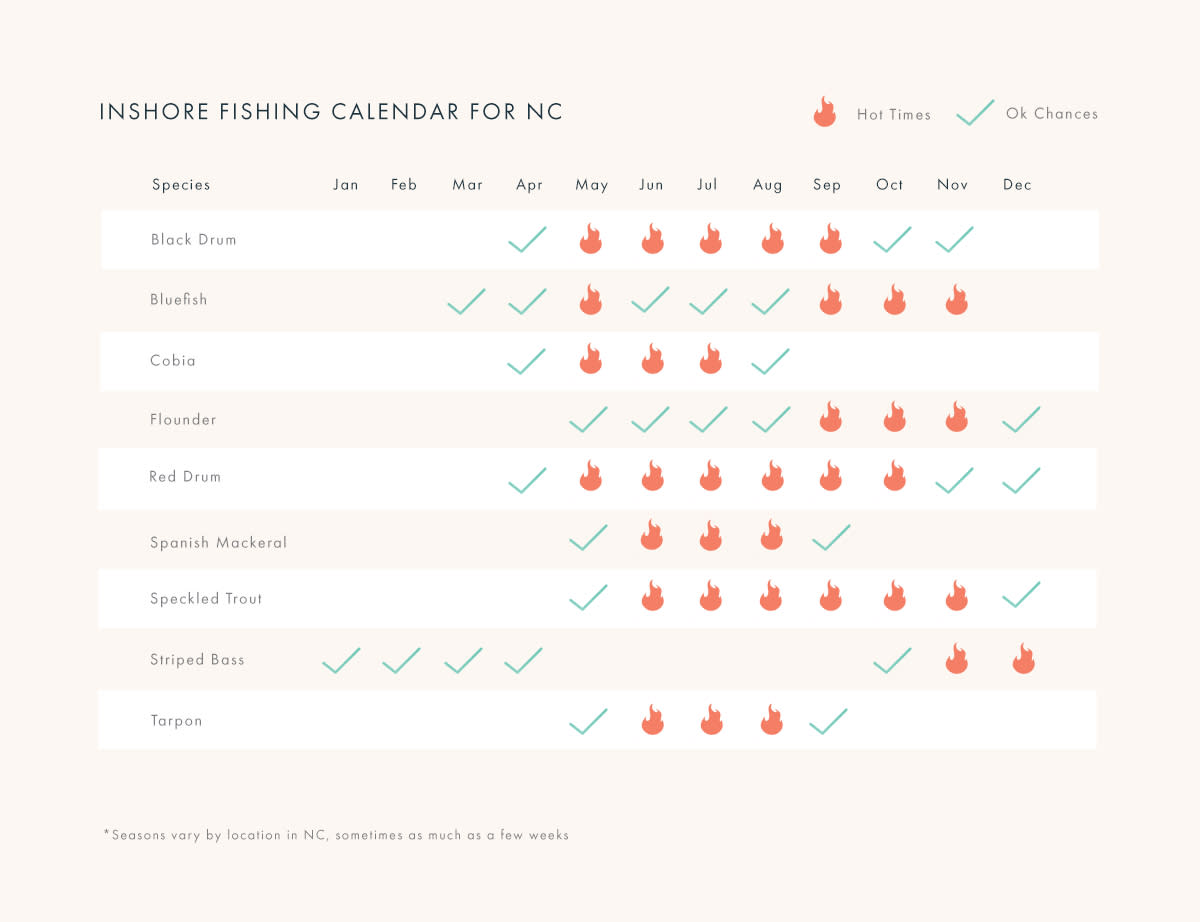
Always check the latest NC Division of Marine Fisheries regulations for current seasons, sizes, and bag limits — these change annually.
Offshore Fishing
Offshore fishing here ranges from nearshore reef and wreck trips for amberjack and king mackerel to bluewater trolling in the Gulf Stream for marlin, tuna, and mahi. Most offshore charters depart from Morehead City and Atlantic Beach; bluewater trips typically run 40 to 60 miles offshore and require a full day on the water.
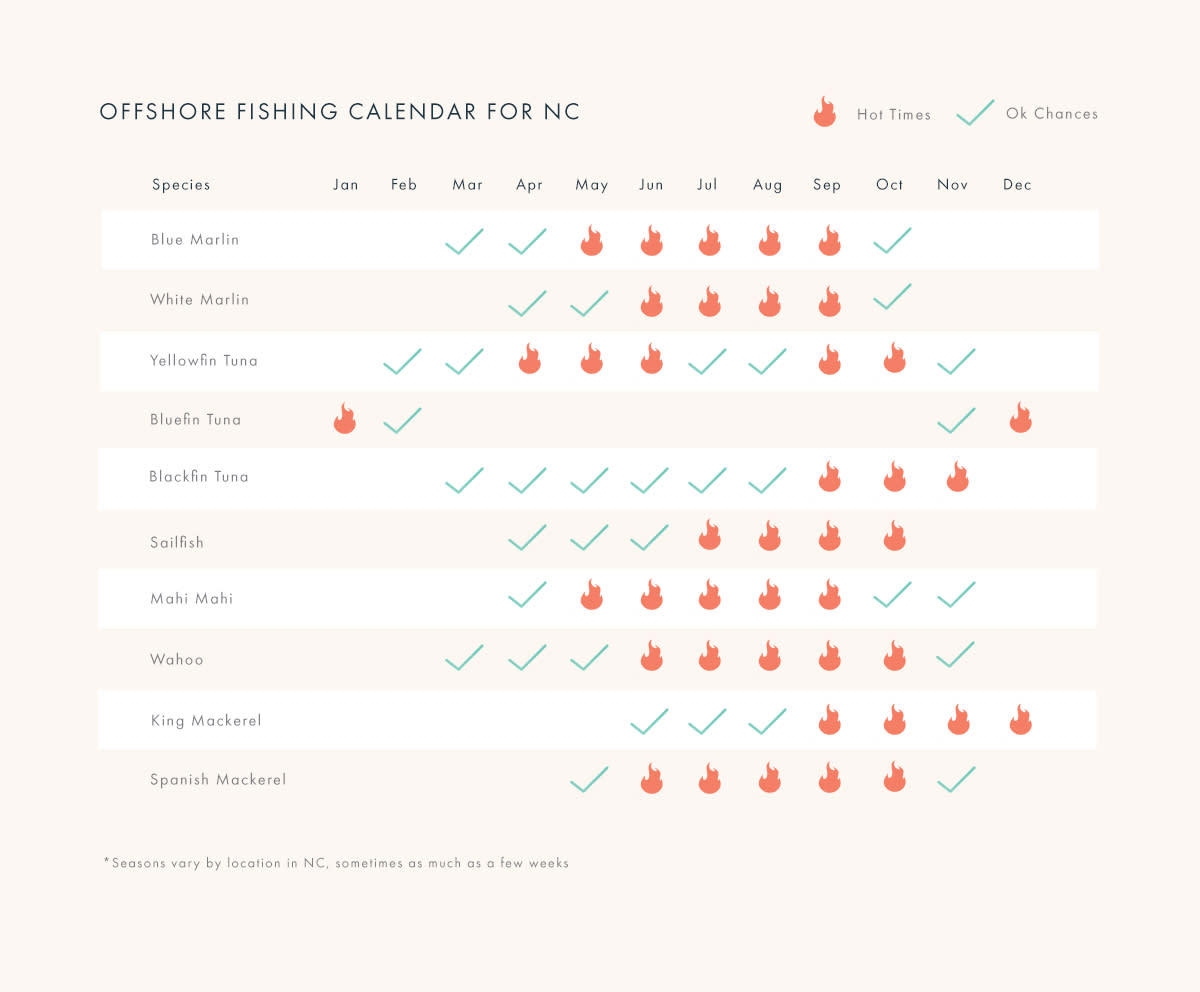
The Big Rock Blue Marlin Tournament in Morehead City each June is one of the longest-running and highest-stakes billfish tournaments on the East Coast — a strong indicator of how productive marlin fishing gets here in early summer.
Pier & Surf Fishing
Not every Crystal Coast fishing trip requires a boat. The region has two well-known fishing piers — the 1,000-foot Bogue Inlet Pier in Emerald Isle and the Oceanana Fishing Pier in Atlantic Beach — both offering rod rentals, bait, tackle, and direct ocean access. Common pier catches include Spanish mackerel, bluefish, spot, croaker, flounder, and the occasional king mackerel from the pier's end.
Surf fishing along Bogue Banks, Shackleford Banks, and the Cape Lookout shoreline produces year-round, with red drum, pompano, and bluefish among the most common surf species. Fall is the standout surf-fishing season, when red drum stage heavily through the inlets.
Fishing Licenses & Resources
A valid North Carolina Coastal Recreational Fishing License (CRFL) is required for anyone 16 or older fishing in coastal waters — including from piers, the surf, and from boats. Lifetime, 10-day, and annual licenses are available; some pier operators also offer blanket licenses covering anglers fishing from their pier.
Best Time of Year to Fish the North Carolina Coast
Crystal Coast fishing runs year-round, but each season has its standouts:
- Spring (March – May): Cobia runs along the nearshore, the start of mahi and wahoo offshore, and a strong spring speckled trout bite in the sounds.
- Summer (June – August): Peak offshore season — billfish, tuna, and mahi all biting hard. Inshore, this is prime time for flounder, Spanish mackerel, and slot-sized red drum.
- Fall (September – November): Many anglers consider fall the strongest overall fishing season along the North Carolina coast. Red drum stage in the inlets for fall runs, speckled trout fishing peaks, and king mackerel are still hitting nearshore reefs.
- Winter (December – February): Striped bass move into the coastal rivers, and offshore wreck fishing for blackfin tuna and amberjack stays productive when weather windows allow. Big red drum continue running through the surf into early winter.
Plan Your Fishing Trip
Whether you're booking a guided trip or fishing on your own, a Crystal Coast fishing weekend takes a little planning:
- For inshore trips: Half-day inshore charters are widely available from Beaufort, Morehead City, and Atlantic Beach — typically four hours, with all gear and bait provided.
- For offshore trips: Full-day Gulf Stream charters depart at dawn and return mid-to-late afternoon. Book at least a month in advance for summer dates.
- For pier or surf fishing: No booking required — buy a license, grab tackle from a local shop, and pick your tide.
- Bring back your catch: Many Crystal Coast restaurants flying the Carteret Catch logo will cook your fresh catch for you on request.
Browse sport fishing charters or learn about local fishing tournaments.
Frequently Asked Questions About NC Coast Fishing
What fish can I catch on the Crystal Coast?
The Crystal Coast supports more than two dozen popular sport fish across inshore, nearshore, and offshore waters, making it a fantastic year-round fishing destination. Common inshore catches include red drum, speckled trout, flounder, black drum, Spanish mackerel, and bluefish. Offshore species include blue marlin, sailfish, yellowfin and blackfin tuna, mahi, wahoo, king mackerel, amberjack, cobia, and several grouper and snapper varieties.
Do I need a fishing license to fish on the Crystal Coast?
Yes — anyone 16 or older needs a valid North Carolina Coastal Recreational Fishing License (CRFL) to fish in coastal waters, including from public piers, the surf, and from boats. Licenses can be purchased online, at most tackle shops, or directly through the NC Division of Marine Fisheries.
When is the best time of year to fish the Crystal Coast?
Fall — September through November — is widely considered the strongest overall fishing season along the North Carolina coast, with peak red drum and speckled trout activity in the sounds and continued offshore action. Summer is the standout for billfish, tuna, and mahi. Spring brings strong cobia runs and the start of mahi season offshore. Winter is the time for striped bass in coastal rivers and offshore wreck fishing on fishable days.
Do I need a boat to fish the Crystal Coast?
No. The Crystal Coast has two major public fishing piers — Bogue Inlet Pier in Emerald Isle and Oceanana Fishing Pier in Atlantic Beach — both offering rod rentals, bait, and direct ocean access. Surf fishing is also popular along Bogue Banks, Shackleford Banks, and the beaches of Cape Lookout National Seashore. If you'd like to head offshore, charter options range from short inshore trips out of Beaufort to all-day Gulf Stream runs from Morehead City.
What is the Big Rock Blue Marlin Tournament?
The Big Rock Blue Marlin Tournament, held annually in Morehead City each June, is one of the longest-running and highest-stakes billfish tournaments on the East Coast. It draws hundreds of boats and is the marquee marlin fishing event on the North Carolina coast. Even if you're not competing, the weigh-ins on the Morehead City waterfront are a major Crystal Coast summer event and worth witnessing in person.